Laryngeal region segmentation and tracking
Final degree project (highest honours) within a European biomedical research project: tracking laryngeal structures in endoscopic video.
Problem
Endoscopic video of the larynx is noisy, low-contrast and full of motion artefacts. Reliably following the laryngeal region frame to frame is a prerequisite for any further clinical measurement, but classic frame-by-frame detection breaks down as soon as the structure is briefly occluded or moves fast.
Approach
The project combined classic computer vision with temporal filtering rather than relying on manual annotation per frame:
- Detection + segmentation of the laryngeal region with OpenCV, built on classic object-detection techniques suited to the image quality available.
- Kalman filter to keep the tracked region temporally consistent: it predicts the next position from the previous trajectory and corrects it with each new detection, so a single bad frame does not break the tracking.
Result
A working pipeline that detects, segments and tracks the region across a full video, developed end to end in Python/OpenCV as part of a European biomedical research project, graded with highest honours (Matrícula de Honor).
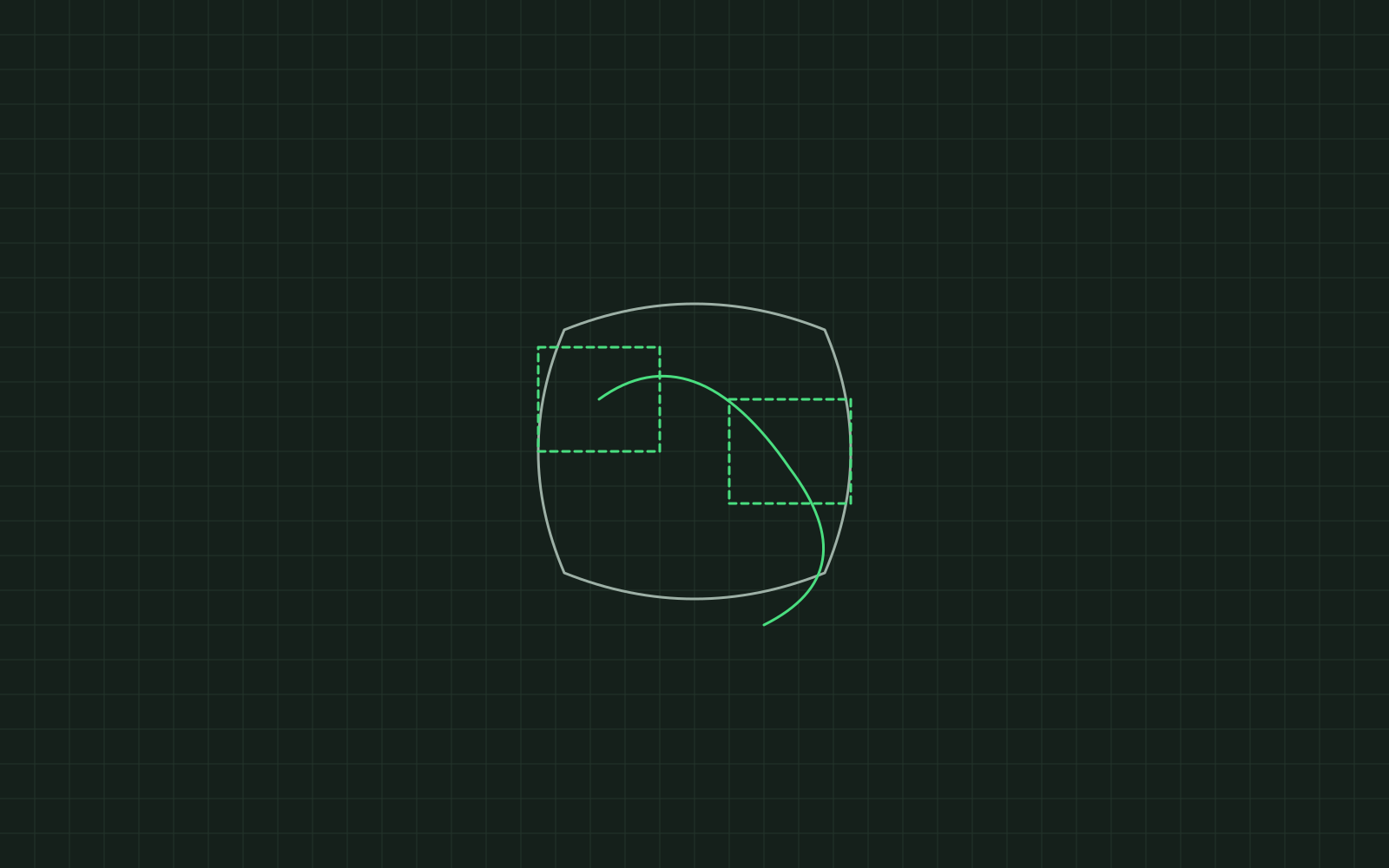
The original footage cannot be published here, so this case study is illustrated only with a drawn illustration, not clips from the real study.